
Exhibition Review: When freedom called: Mimi Chen Ting, Millicent Rogers and the enduring pull of Taos
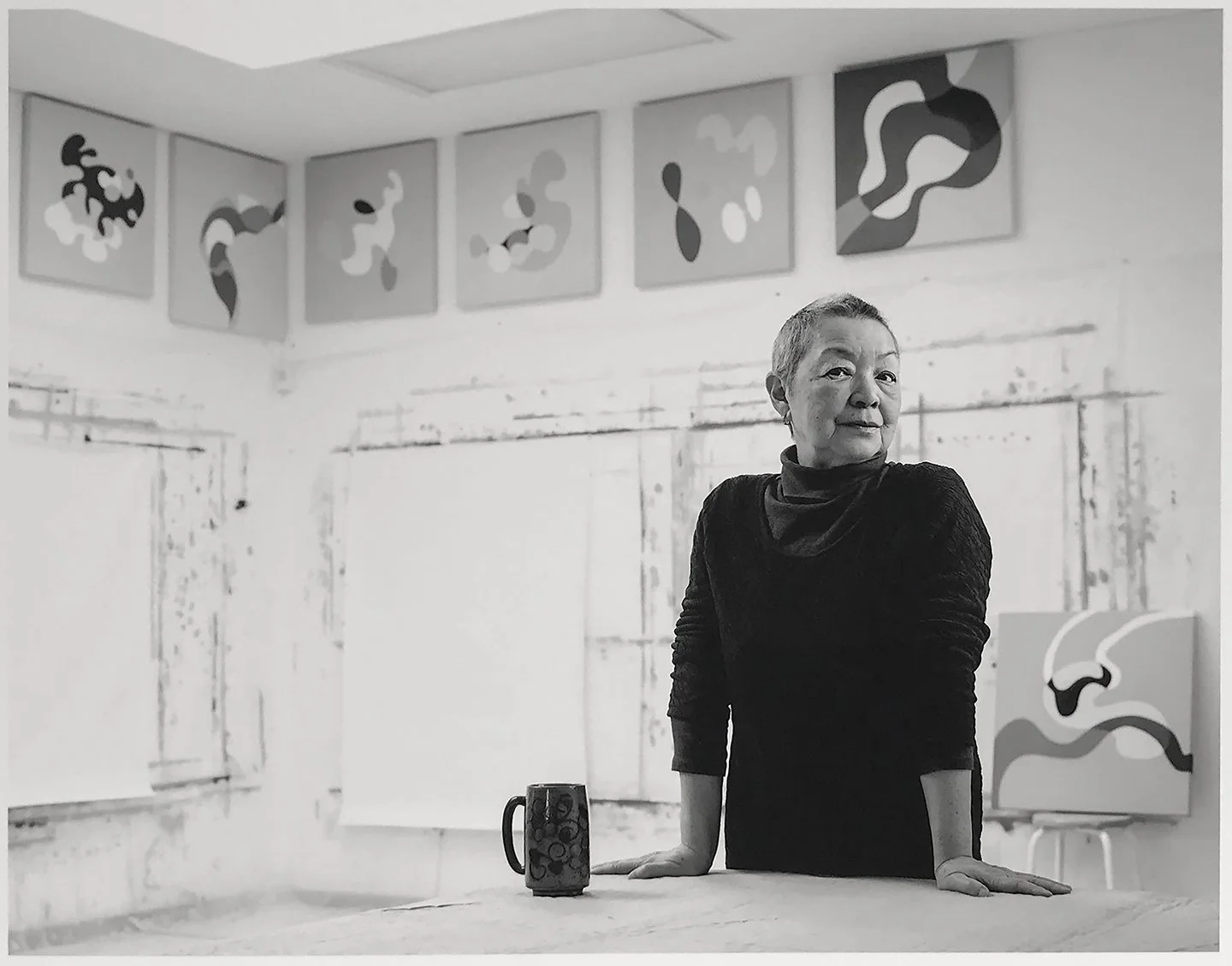
Photo by Paul O’Connor
'A Lightness of Being'
Works by Mimi Chen Ting
Opening reception Saturday (June 20)
5 to 7 p.m.
The Millicent Rogers Museum
504 Millicent Rogers Road
Museum hours are 10 a.m. to 5 p.m. Thursday through Tuesday
Exhibition on view through December 20
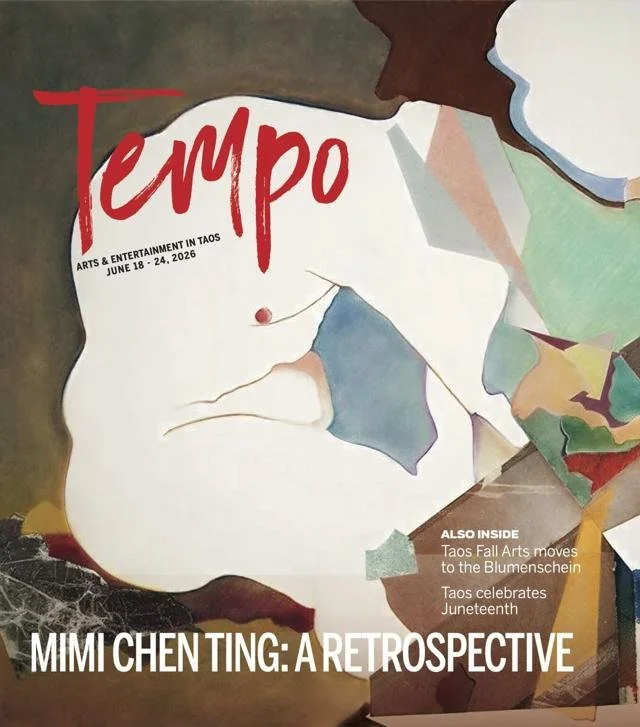
By Haven Lindsey — Taos News
What happens when a woman spends her entire life answering the call of freedom, truth, curiosity and artistic expression?
There is something fitting about Mimi Chen Ting's work returning to the Millicent Rogers Museum. The institution bears the name of another woman who arrived in Taos determined to define herself on her own terms. Born into one of America's most prominent families, Millicent Rogers turned away from the expectations that accompanied wealth and social standing in search of a life shaped by independence and creative expression.
Mimi Chen Ting traveled a distinctly different path. She carried memories of wartime China, convent school in Hong Kong, the responsibilities of motherhood, and years spent carving out space for an artistic practice that refused to be constrained by convention. Yet both women recognized something in this place we call home. Taos offered room to listen to an inner voice and the freedom to answer it.
Opening Saturday (June 20), “A Lightness of Being: Works on Paper by Mimi Chen Ting” brings the late artist back to the museum where she once performed and to the community that became the spiritual center of her life. On view through December 20, the exhibition presents 11 monoprints and works on paper drawn from more than two decades of Ting's years in northern New Mexico. Intimate in scale and deeply personal in spirit, the exhibition reveals an artist who approached the world with openness and wonder while remaining rooted in discipline and emotional honesty.
The presentation represents an extraordinary collaboration among the Millicent Rogers Museum, the Ting Family Estate, Artist Estate Studio and Louis Stern Fine Arts in Los Angeles. It coincides with a retrospective at the Brigham Young University Museum of Art and a recent exhibition at the Louis Stern Gallery in Los Angeles, placing Taos within a larger effort to honor Ting's remarkable career.
The exhibition in Taos, however, offers something different. Drawn from works held by the family and estate, these pieces provide a more intimate encounter with an artist who made this community her home.
"We really credit the collaboration of Louis Stern, the Ting Family Trust, the estate and their willingness and generosity," said Claire Motsinger, Curator of Community and Collections at the Millicent Rogers Museum of this new exhibit. "They are the reason that this is happening."
Motsinger noted that Ting was not simply an artist who passed through Taos. She became part of its creative fabric, living here from the late 1980s until her death in 2022.
"She was so loved," Motsinger said. "It is wonderful to have her come back to us."
Born in Shanghai in 1946 during a period of political upheaval, Ting spent her childhood in China before her family relocated to Hong Kong. The impressions she carried from those early years would surface repeatedly throughout her work. She remembered her grandmother's bound feet and visits to Buddhist temples filled with ritual and color. She studied calligraphy in school and absorbed the theatrical gestures of the Beijing Opera. Without realizing it, she was developing a visual vocabulary that would later find expression across disciplines and throughout her career.
In 1965, Ting moved to San Francisco and initially pursued degrees in sociology and English literature before acknowledging what she had long understood: Art was not simply an interest. It was essential. She transferred to San Jose State University and immersed herself in the cultural energy of the era. She participated in anti-war protests and attended the final rally for Robert Kennedy before his assassination.
Marriage and motherhood soon followed, yet the demands of daily life never diminished her commitment to making art. One of her earliest exhibitions included paintings created in the corner of a bedroom while her infant daughter slept nearby.
"My methodology is to initiate, observe, wait, and respond," Ting wrote in 2021. "I do not seek absolute resolutions, but venture forth as an intrepid wanderer, unconcerned with becoming lost." The words describe both an artistic philosophy and a way of moving through the world. For many of us, becoming lost is the gateway to freedom. Curiosity shaped her choices, and uncertainty was not something to be feared. It was something to embrace.
That openness ultimately led her to Taos. In 1988, what began as a trip inspired by a desire to attend the Santa Fe Opera evolved into what Ting called her "second migratory arc." She impulsively purchased a one-room house on the mesa that became sanctuary and studio. Even when family obligations drew her back to California, Taos remained the place where she found lucidity.
"Taos gives me clarity and simplicity of vision," Ting wrote near the end of her life. "It gives me permission to be silent, and just listen without fear of interruption. It called to me, and I answered."
That spirit of attentive listening permeates the works gathered in “A Lightness of Being.” The exhibition's monoprints and works on paper range from early Taos pieces to later abstractions. Some reflect the landscape that inspired her through shifting forms and heightened contrasts. Others suggest emotional states through gesture and movement. Many contain traces of the dance practices that informed her performance work, revealing an artist deeply attuned to the dialogue between the body and the world around it.
For Ting, the monoprint process embodied the Buddhist practice of beginner's mind. Unlike traditional editions, monoprints yield a single unrepeatable image. Timing and chance converge in ways that cannot be duplicated.
"Monoprints allow for the unexpected," Ting once observed, “an uncertainty that fascinates me." The result is work that feels immediate and alive, inviting viewers to let go of certainty in order to embrace discovery.
Ting's family remembers that same quality of presence. Her daughter Cheryl described her mother as "the intrepid explorer, courageously forging her own path and listening to the heartbeat of the work that came through her." Granddaughter Maia recalled sitting on the floor of the studio with paper and colored pencils while her grandmother moved across the room "in what could only be described as a dance." To those who knew her best, art was never separate from life. It informed the way she mothered, taught, listened and loved.
"I do not think art can save us all," Ting wrote, "but it can console and inspire, bring light to the darker shadows, and ease, if not enhance, our human experiences."
Perhaps that is the lasting gift of this exhibition. Within the walls of a museum named for a woman who sought freedom, visitors encounter another who answered that same call with courage and curiosity. Through these works on paper, Mimi Chen Ting reminds us that there are no fixed horizons and that the truest acts of creation begin by listening for the voice that asks us to become more fully ourselves.
